Understanding Drawdown in Trading and How to Control It
Drawdown is one of the toughest challenges traders face. It’s the decline from your highest account balance during losing streaks, and if unmanaged, it can shake confidence and wipe out capital. Learn how to control drawdown with position sizing, stop-losses, discipline, and automation.
If you’ve been trading for some time, you probably know the feeling of watching your account balance dip after a few losing trades. That sinking moment is called Drawdown. It’s one of the toughest parts of trading because it doesn’t just reduce your money, it can also shake your confidence and make you question your strategy.
But here’s the truth: drawdown is a normal part of manual or algo trading. No strategy wins all the time. Even the best systems go through periods of losses. The key is not to avoid drawdown completely, but to learn how to manage it so that it doesn’t get out of control. In this article, we’ll break down what drawdown means, why it happens, and how you can control it with some simple rules.
What is Drawdown?
Drawdown is the drop in your account balance from its highest point down to the lowest point during a losing streak. It lasts until your account recovers to the previous high.
Think of it like this: imagine your account grows to ₹10,000. Then, after a series of losing trades, it falls to ₹6,000 before climbing back up again. That fall of ₹4,000 is your drawdown.
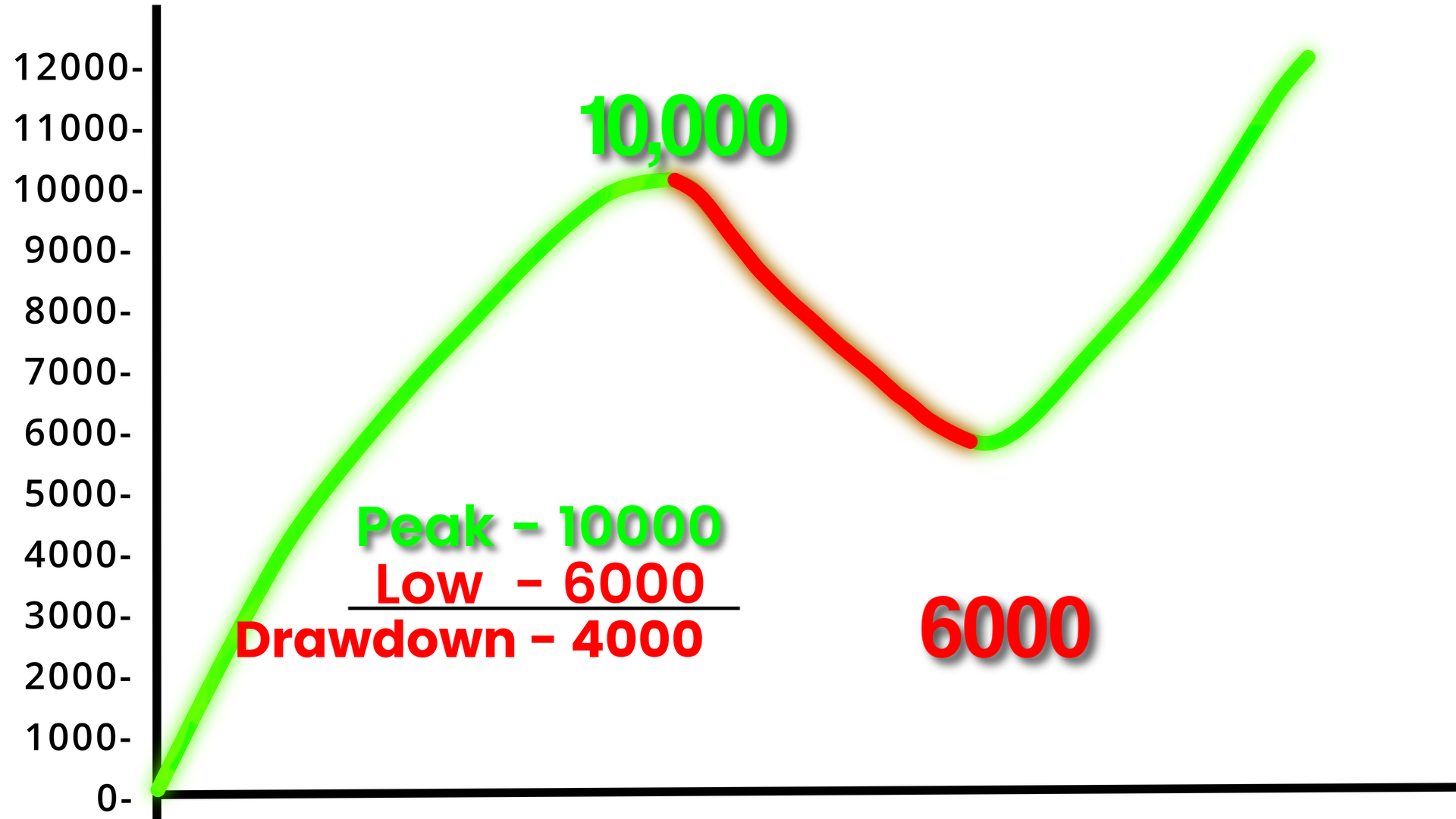
The deeper the losses, the bigger the drawdown. And if you don’t manage it properly, drawdown can lead to emotional decisions like chasing losses or abandoning your strategy, which often makes things worse.
How Does Drawdown Happen?
Drawdown usually builds up when traders break their own rules. It’s not just one bad trade; it’s repeated mistakes that pile up over time. Some common reasons include:
- Risking too much on each trade: Putting a large portion of your account into one trade can wipe out your balance quickly.
- Revenge trading: Trying to win back losses by taking impulsive trades often leads to even bigger losses.
- Ignoring stop-losses: Without a stop-loss, a small loss can turn into a huge one.
- Oversized positions: Refusing to cut a losing trade or trading too big magnifies the damage.
In short, Drawdown happens when discipline breaks down.
How to Control Drawdown
The good news is that drawdown can be managed. Here are four simple rules that can help you keep it under control:
- Manage Position Size
Don’t risk too much on a single trade. Many traders limit their risk to between 0.5% and 2% of their account size. This way, even if you hit a losing streak, your capital won’t be wiped out. - Use Stop-Losses
A stop-loss is like a safety net. It automatically closes your trade when losses reach a certain level. Always set it based on market structure, not emotions. - Avoid Over-Trading
Trading more doesn’t mean earning more. Focus on high-quality setups instead of forcing trades just to stay active. Over-trading often leads to poor decisions and bigger drawdowns. - Automate Your Trades
This is where QuantMan can help. By automating your strategies, you remove emotions from the process. The system enforces your rules every time, so you don’t break discipline. Automation ensures that your drawdown stays within limits.
Conclusion
Drawdown is part of every trader’s journey. You can’t avoid it completely, but you can control it. By managing your position size, using stop-losses, avoiding over-trading, and automating your strategies, you can keep drawdown in check and protect your confidence. The next time your account dips, don’t panic. Remember that drawdown is normal, and with the right rules, you can handle it.
If this article helped you understand drawdown better, explore more tutorials and insights on QuantMan. And if you’re ready to trade with discipline, start automating your strategies today.